Background: Cesarean section (CS) rates are influenced by maternal characteristics, obstetric risk profiles, and institutional practices. The Robson Ten-Group Classification System (RTGCS) provides a standardized framework for comparing CS patterns across healthcare facilities. This study aimed to compare CS rates, maternal and obstetric characteristics, and Robson group distributions between governmental and private hospitals in Jeddah, Saudi Arabia. Methods: A retrospective, multicenter comparative study was conducted at King Abdulaziz Hospital (governmental) and Aljadaani New Hospital (private), Jeddah, Saudi Arabia, using delivery records from January to December 2025. Overall, 3,485 deliveries were reported, including 967 cesarean deliveries. Maternal characteristics, obstetric factors, and Robson group distributions were compared between hospitals. Associations were expressed as unadjusted odds ratios (cORs) with 95% confidence intervals (CIs), and statistical significance was established at p < 0.05. Results: Overall CS rates were comparable between governmental and private hospitals (28.0% vs. 27.1%; p = 0.58). However, emergency CS was significantly more frequent at the governmental hospital (71.4% vs. 47.9%; cOR 2.73, 95% CI 2.03-3.66). Women undergoing CS at the governmental hospital had higher odds of chronic diabetes mellitus (cOR 7.29, 95% CI 3.89-13.66), previous CS (cOR 1.57, 95% CI 1.16-2.11), preterm delivery (cOR 1.87, 95% CI 1.27-2.75), and absence of antenatal care (cOR 14.28, 95% CI 7.45-27.36). Robson Group 5 contributed the largest proportion of CS procedures in both hospitals (26.7% vs. 22.8%). Group 10 was more strongly represented at the governmental hospital (23.7% vs. 14.3%; OR 1.87, 95% CI 1.27-2.75), whereas Groups 2, 4, and 7 contributed significantly greater proportions at the private hospital. Conclusion: Despite comparable overall CS rates, governmental and private hospitals demonstrated distinct maternal risk profiles and Robson group distributions. Governmental hospital CS cases were characterized by a greater burden of maternal comorbidities, preterm deliveries, and emergency procedures, whereas elective CS and contributions from selected term Robson groups were higher in the private hospital. These findings highlight the importance of risk-informed, hospital-specific strategies, including improved antenatal care, standardized induction practices, and appropriate trial of labor after cesarean, supported by routine Robson classification audits.
This is an Open Access article, distributed under the terms of the Creative Commons Attribution 4.0 International License (http://creativecommons.org/licenses/by/4.0/), which permits unrestricted use, distribution and reproduction in any medium or format, provided the original work is properly cited.
Cesarean section (CS) is a life-saving obstetric intervention when medically indicated. However, increasing CS rates worldwide have raised concerns regarding potentially avoidable procedures and their implications for maternal and neonatal health. Comparisons based solely on crude CS rates may be misleading because hospitals differ in maternal risk profiles, obstetric characteristics, referral patterns, and clinical practices. Therefore, standardized assessment is essential for meaningful comparisons between healthcare facilities
[1]
World Health Organization. Robson classification: implementation manual. Geneva: World Health Organization; 2017.
[2]
Rookesh Z, Zarshenas M, Akbarzadeh M. Prevalence of cesarean section based on Robson's classification in selected delivery centers of Shiraz University of Medical Sciences. Shiraz E-Med J. 2020; 21(7): e96275.
The World Health Organization (WHO) recommends the Robson Ten-Group Classification System (RTGCS) for monitoring and comparing CS rates. This system categorizes women into 10 mutually exclusive groups based on parity, previous CS, onset of labor, gestational age, fetal presentation, and number of fetuses. It facilitates identification of groups contributing disproportionately to CS rates and supports evaluation of variations in obstetric practice
[1]
World Health Organization. Robson classification: implementation manual. Geneva: World Health Organization; 2017.
[1]
. Particular attention is directed toward Groups 1 and 2, representing nulliparous women with term singleton cephalic pregnancies, and Group 5, comprising women with previous CS, which is consistently identified as a major contributor to overall CS rates
[2]
Rookesh Z, Zarshenas M, Akbarzadeh M. Prevalence of cesarean section based on Robson's classification in selected delivery centers of Shiraz University of Medical Sciences. Shiraz E-Med J. 2020; 21(7): e96275.
Sanisoglu S, Engin-Ustun Y, Karatas Baran G, Kurumoglu N, Keskinkilic B. Use of ten-group Robson Classification in Türkiye to discuss cesarean section trends. Minerva Obstet Gynecol. 2023; 75(4): 333-9.
Ulgu MM, Birinci S, Altun Ensari T, Gözükara MG. Cesarean section rates in Turkey 2018-2023: overview of national data by using Robson ten group classification system. Turk J Obstet Gynecol. 2023; 20(3): 191-8.
Dhakal Rai S, van Teijlingen E, Regmi PR, Wood J, Dangal G, Dhakal KB. Explaining rising caesarean section rates in urban Nepal: a mixed-methods study. PLoS One. 2025; 20(2): e0318489.
Patamasingh Na Ayudhaya O, Kittikraisak W, Phadungkiatwatana P, Hunt DR, Tomyabatra K, et al. Evaluation of cesarean delivery rates and factors associated with cesarean delivery among women enrolled in a pregnancy cohort study at two tertiary hospitals in Thailand. BMC Pregnancy Childbirth. 2024; 24: 149.
International studies demonstrate substantial variation in CS rates and Robson group distributions across healthcare settings. Rookesh et al. reported that Group 5 accounted for 46.6% of CS procedures in two Iranian hospitals, followed by Group 2 (19.5%)
[2]
Rookesh Z, Zarshenas M, Akbarzadeh M. Prevalence of cesarean section based on Robson's classification in selected delivery centers of Shiraz University of Medical Sciences. Shiraz E-Med J. 2020; 21(7): e96275.
. Similarly, national studies from Türkiye identified Groups 1, 2, and 5 as important contributors, with significant differences between public and private facilities
[3]
Sanisoglu S, Engin-Ustun Y, Karatas Baran G, Kurumoglu N, Keskinkilic B. Use of ten-group Robson Classification in Türkiye to discuss cesarean section trends. Minerva Obstet Gynecol. 2023; 75(4): 333-9.
Ulgu MM, Birinci S, Altun Ensari T, Gözükara MG. Cesarean section rates in Turkey 2018-2023: overview of national data by using Robson ten group classification system. Turk J Obstet Gynecol. 2023; 20(3): 191-8.
. A study from Nepal reported higher CS rates in private than public hospitals (68.5% vs. 37.1%), highlighting potential institutional differences
[5]
Dhakal Rai S, van Teijlingen E, Regmi PR, Wood J, Dangal G, Dhakal KB. Explaining rising caesarean section rates in urban Nepal: a mixed-methods study. PLoS One. 2025; 20(2): e0318489.
. Furthermore, a Thai study identified maternal age, obesity, pregnancy complications, and healthcare payment arrangements as factors independently associated with CS among women in Robson Group 1
[6]
Patamasingh Na Ayudhaya O, Kittikraisak W, Phadungkiatwatana P, Hunt DR, Tomyabatra K, et al. Evaluation of cesarean delivery rates and factors associated with cesarean delivery among women enrolled in a pregnancy cohort study at two tertiary hospitals in Thailand. BMC Pregnancy Childbirth. 2024; 24: 149.
Although the RTGCS provides a standardized framework, differences in maternal characteristics and obstetric case mix may influence hospital comparisons beyond Robson classification alone
[7]
Muraca GM, Joseph KS, Razaz N, Ladfors LV, Lisonkova S, Stephansson O. Crude and adjusted comparisons of cesarean delivery rates using the Robson classification: a population-based cohort study in Canada and Sweden, 2004 to 2016. PLoS Med. 2022; 19(8): e1004077.
. Evidence comparing CS characteristics and Robson group distributions between governmental and private hospitals in Saudi Arabia remains limited. Understanding these variations may help distinguish differences in patient populations from potentially modifiable institutional practices.
Therefore, this study aimed to compare the demographic, maternal, and obstetric characteristics of women undergoing CS at King Abdulaziz Hospital (governmental) and Aljadaani New Hospital (private) in Jeddah, Saudi Arabia, and to identify and compare the relative contributions of the 10 Robson groups to CS procedures at both hospitals.
2. Objectives
The objectives of this study were to (1) describe and compare the demographic, obstetric, and clinical characteristics of women who underwent CS at a government hospital and a private hospital in Jeddah using the RTGCS and (2) identify the Robson groups accounting for the largest proportions of CS in each hospital and compare the distribution of these groups between the hospitals.
3. Materials and Methods
3.1. Study Design
This was a descriptive, retrospective, multicenter comparative cohort study conducted at King Abdulaziz Hospital, a government hospital with approximately 445 beds, and Aljadaani New Hospital, a private hospital with a capacity of 100 beds. Both hospitals are located in southern Jeddah, Saudi Arabia and are classified as secondary-level care hospitals. The study included deliveries that occurred between 1 January and 31 December 2025.
3.2. Inclusion and Exclusion Criteria
The study included women aged 18-50 years who delivered at either hospital at more than 26 weeks’ gestation, whose neonates had a birthweight of more than 500 g, and for whom complete registry data were available. Women with incomplete medical records, those whose neonates had a birthweight of less than 500 g, and those who delivered outside the participating hospitals were excluded.
3.3. Data Collection and Robson Classification
Data were extracted from the electronic medical records and labor ward registries of both hospitals and entered into an Excel spreadsheet. The collected data included maternal demographic characteristics, such as age; obstetric history and current pregnancy characteristics, including maternal diabetes, hypertensive disorders, multiple pregnancy. Additional variables included parity, previous CS, onset of labor, gestational age, whether CS was elective or emergency, fetal presentation, and number of fetuses.
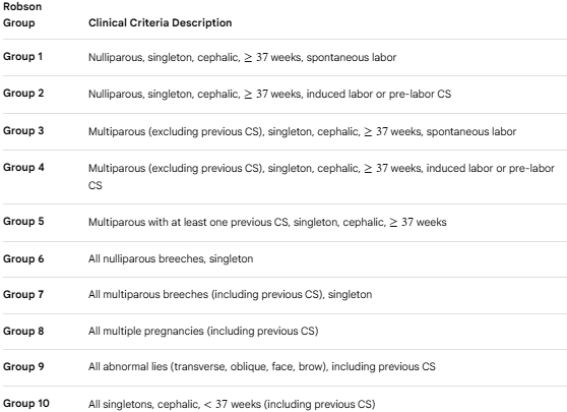
In accordance with the WHO operational guidelines, each woman was assigned to one of the 10 mutually exclusive and collectively exhaustive groups of the RTGCS (Robson ten group classification system) based on five obstetric characteristics: (1) parity and previous uterine scar; (2) onset of labor (spontaneous, induced, or pre-labor CS); (3) gestational age (preterm [<37 weeks] or term [≥37 weeks]); (4) fetal presentation or lie (cephalic, breech, transverse, or oblique); and (5) number of fetuses (singleton or multiple pregnancy). The criteria used to classify women into the 10 Robson groups are summarized in Figure 1.
Figure 1. Ten -Group classification System for cases delivered by cesarean section.
3.4. Statistical Analysis
Statistical analysis was performed using IBM SPSS Statistics for Windows, version 28.0 (IBM Corp., Armonk, NY, USA). For continuous variables, frequency, mean, and standard deviation were calculated. The level of statistical significance was set at 0.05. Odds ratios were used to compare categories. Relative contribution percentage was calculated for each RTGCS subgroup.
3.5. Ethics Approval and Consent to Participate
The study was conducted in accordance with the Declaration of Helsinki, and the protocol was approved by the ISNC Ethics Committee (approval no. IRRB-61-02032026). Approval was also obtained from the Ministry of Health Ethics Committee (approval no. IRRRB: A02501; 29 April 2026).
4. Results
Table 1 presents the distribution of delivery routes across the two participating hospitals in Jeddah. A total of 3485 delivery records were merged from two participating centers in Jeddah: Aljadaani New Hospital (n = 957) and King Abdulaziz Hospital (n = 2528). The crude CS rates were similar between the government hospital and the private hospital, at 28.0% (708/2,528) and 27.1% (259/957), respectively (p = 0.58).
Maternal characteristics among women who underwent CS are presented in Table 2. The distribution of maternal age categories did not differ significantly between hospitals (p = 0.2). However, differences were observed in the prevalence of diabetes mellitus, hypertensive disorders, previous uterine scar, and prematurity. Higher-risk, more complex cases were managed at the government hospital. Antenatal care attendance was also substantially higher at the private hospital (p=0.001)
Table 3 presents the distribution of Robson-related factors among women who underwent CS. Among CS deliveries, the proportion performed as emergencies was significantly higher at King Abdulaziz Hospital than at Aljadaani New Hospital (71.5% vs 47.9%), whereas elective procedures accounted for 28.5% and 52.1%, respectively (p < 0.001).
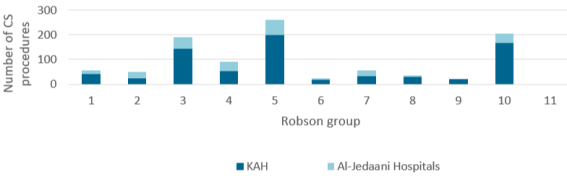
As shown in Table 4 and Figure 2, the Robson group analysis revealed three notable findings. First, Group 5 (multiparous women with at least one previous CS, singleton cephalic pregnancy, and a gestational age of ≥37 weeks) made the largest contribution to CS in both hospitals, accounting for 26.7% of CS procedures at the governmental hospital and 22.8% at the private hospital. Second, the private hospital had a markedly higher proportion of pre-labor (elective) CS (52.1% vs 28.5%; p < 0.001), together with larger contributions from Groups 2 (9.65% vs 3.2%), 4 (13.1% vs 7.6%), and 7 (9.65% vs 4.5%). Third, the governmental hospital had a higher proportion of preterm and medically complex pregnancies: Group 10 accounted for 23.7% of its CS procedures vs 14.3% at the private hospital), and women who underwent CS there more frequently had diabetes (24.4% vs 4.2%), hypertensive disorders, including preeclampsia (10.5% vs 3.9%), and no antenatal care (36.4% vs 3.86%). Taken together, these patterns suggest that the two hospitals achieve similar crude CS rates through different pathways: case-mix and clinical risk in the government sector and greater use of planned CS in low-risk groups in the private sector.
Table 1. Distribution of delivery routes in the study population.
Hospital name
DELIVERY ROUTE
VALUES
TOTAL
King Abdulaziz Hospital
VD
1820 (72.0%)
2528
CS
708 (28.0%)
ELECTIVE CS
202 (28.6%)
708
EMS CS
506 (71.4%)
ALJADAANI HOSP
VD
698 (72.9%)
957
CS
259 (27.1%)
ELECTIVE CS
135 (52.1%)
259
EMS CS
124 (47.9%)
Note. CS: cesarean section.
Table 2. Maternal characteristics of women who underwent CS at participating hospitals.
GOVERNMENTAL
PRIVATE
CrudeOR
N
%
N
%
P
95% CI
mother_age
<18
7
1.0%
0
0.0%
0.2
5.71 (0.32-100.7)
18-26
153
21.6%
47
18.1%
27-35
316
44.6%
120
46.3%
>35
232
32.8%
92
35.5%
Maternal hypertensive disease
no
633
89.4%
249
96.1%
0.01
yes
35
4.9%
10
3.9%
7.29 (3.89-13.66)
PET, Gestational I induced
40
5.6%
0
0.0%
DM
no chronic Dm
535
75.6%
248
95.8%
chronic DM
173
24.4%
11
4.2%
0.001
7.29 (3.89-13.66)
ANC (antenatal care)
no ANC
258
36.4%
10
3.86%
0.001
14.28 (7.45-27.36)
ANC
450
63.6%
249
96.1%
Table 3. Distribution of Robson-related factors among women who underwent CS.
GOVERNMENTAL
PRIVATE
Crude OR
N
%
N
%
P
95%CI
parity
Nullipara
128
18.1%
65
25.1%
0.016
0.66 (0.47-0.93)
multipara
580
81.9%
194
74.9%
PREVIOUS_CS
no prevscar
392
55.4%
171
66.0%
previous cs
316
44.6%
88
34.0%
0.003
1.57 (1.16-2.11)
Gestational age
more than or equals 37 weeks
540
76.3%
222
85.7%
less than 37 weeks
168
23.7%
37
14.3%
0.001
1.87 (1.27-2.75)
Prelabor CS vs spontaneous emergrncy cs
prelabor cs
202
28.5%
135
52.1%
Spontaneous ems cs
506
71.5%
124
47.9%
0.001
2.73 (2.03-3.66)
Fetal presentation
cephalic
637
89.9%
218
84.2%
0.001
0.44 (0.28-0.69)
breech
50
7.1%
39
15.1%
others
21
3%
2
0.7%
No of fetuses
singleton
680
96%
251
96.9%
0.53
1.29 (0.58-2.87)
multiple
28
4%
8
3.1%
Table 4. Distribution of CS procedures across Robson groups at the two hospitals.
Figure 2. Distribution of CS procedures across the 10 Robson groups at the participating hospitals.
5. Discussion
5.1. Overall CS Rates
The CS rates observed in both hospitals (28% and 27%) exceed the 10-15% range historically regarded as optimal at the population level
[1]
World Health Organization. Robson classification: implementation manual. Geneva: World Health Organization; 2017.
[1]
but are lower than the 31.7% estimated for Western Asia and the projected regional rate of nearly 50% by 2030
[12]
Betrán AP, Ye J, Moller AB, Souza JP, Zhang J. Trends and projections of caesarean section rates: global and regional estimates. BMJ Glob Health. 2021; 6(6): e005671.
. They are also close to the most recent national Saudi estimate of 28.1% from the 2024 Woman and Child Health Survey
[11]
General Authority for Statistics. Women Health and Reproductive Care Statistics Publication 2024 (Woman and Child Health Survey 2024) [Internet]. Riyadh: General Authority for Statistics; 2024 [cited 2026 Oct 15]. Available from:
and the 27.5% reported from King Abdulaziz Medical City in Jeddah using the same classification
[13]
Alsulami SM, Ashmawi MT, Jarwan RO, Malli IA, Albar SK, Al-Jifree HM. The rates of cesarean section deliveries according to Robson classification system during the year of 2018 among patients in King Abdul-Aziz Medical City, Jeddah, Saudi Arabia. Cureus. 2020; 12(11): e11529.
HYPERLINK "
. Our rates are considerably lower than those reported in Shiraz
[2]
Rookesh Z, Zarshenas M, Akbarzadeh M. Prevalence of cesarean section based on Robson's classification in selected delivery centers of Shiraz University of Medical Sciences. Shiraz E-Med J. 2020; 21(7): e96275.
Dhakal Rai S, van Teijlingen E, Regmi PR, Wood J, Dangal G, Dhakal KB. Explaining rising caesarean section rates in urban Nepal: a mixed-methods study. PLoS One. 2025; 20(2): e0318489.
Patamasingh Na Ayudhaya O, Kittikraisak W, Phadungkiatwatana P, Hunt DR, Tomyabatra K, et al. Evaluation of cesarean delivery rates and factors associated with cesarean delivery among women enrolled in a pregnancy cohort study at two tertiary hospitals in Thailand. BMC Pregnancy Childbirth. 2024; 24: 149.
Ulgu MM, Birinci S, Altun Ensari T, Gözükara MG. Cesarean section rates in Turkey 2018-2023: overview of national data by using Robson ten group classification system. Turk J Obstet Gynecol. 2023; 20(3): 191-8.
Alamrawy AGA, Karkour TAZ, Abdel-Dayem TM, El Fazary HA. Implementation of Robson's ten-group classification system for cesarean section rates at a tertiary university hospital in Egypt: a prospective study. BMC Pregnancy Childbirth. 2026; 26: 804.
. The similarity of crude rates between the two participating hospitals in this study contrasts with the large public-private differences reported elsewhere: 68.5% vs 37.1% in Nepal
[5]
Dhakal Rai S, van Teijlingen E, Regmi PR, Wood J, Dangal G, Dhakal KB. Explaining rising caesarean section rates in urban Nepal: a mixed-methods study. PLoS One. 2025; 20(2): e0318489.
and 73.1% vs 30.9% in a 2026 European meta-analysis involving more than 12 million births
[8]
Ebadi S, El Radaf V, Mahmood T, Savona-Ventura C, Zaigham M. Caesarean section rates in public vs private hospitals in Europe: a systematic review and meta-analysis using the Robson ten group classification system. Eur J Obstet Gynecol Reprod Biol. 2026; 318: 114921.
. One plausible explanation is that both sectors in Saudi Arabia serve populations with broadly similar cultural attitudes toward vaginal birth. Insurance-based reimbursement in private maternity care may also weaken the financial incentives for CS described in other settings, although these explanations require direct evaluation. However, crude rates may conceal clinically important differences in case mix and group-specific practice
[7]
Muraca GM, Joseph KS, Razaz N, Ladfors LV, Lisonkova S, Stephansson O. Crude and adjusted comparisons of cesarean delivery rates using the Robson classification: a population-based cohort study in Canada and Sweden, 2004 to 2016. PLoS Med. 2022; 19(8): e1004077.
In this study, Group 5 was the largest contributor to CS in both hospitals. It was also the leading contributor in Shiraz (46.6%)
[2]
Rookesh Z, Zarshenas M, Akbarzadeh M. Prevalence of cesarean section based on Robson's classification in selected delivery centers of Shiraz University of Medical Sciences. Shiraz E-Med J. 2020; 21(7): e96275.
Dhakal Rai S, van Teijlingen E, Regmi PR, Wood J, Dangal G, Dhakal KB. Explaining rising caesarean section rates in urban Nepal: a mixed-methods study. PLoS One. 2025; 20(2): e0318489.
Patamasingh Na Ayudhaya O, Kittikraisak W, Phadungkiatwatana P, Hunt DR, Tomyabatra K, et al. Evaluation of cesarean delivery rates and factors associated with cesarean delivery among women enrolled in a pregnancy cohort study at two tertiary hospitals in Thailand. BMC Pregnancy Childbirth. 2024; 24: 149.
Sanisoglu S, Engin-Ustun Y, Karatas Baran G, Kurumoglu N, Keskinkilic B. Use of ten-group Robson Classification in Türkiye to discuss cesarean section trends. Minerva Obstet Gynecol. 2023; 75(4): 333-9.
Ulgu MM, Birinci S, Altun Ensari T, Gözükara MG. Cesarean section rates in Turkey 2018-2023: overview of national data by using Robson ten group classification system. Turk J Obstet Gynecol. 2023; 20(3): 191-8.
Alsulami SM, Ashmawi MT, Jarwan RO, Malli IA, Albar SK, Al-Jifree HM. The rates of cesarean section deliveries according to Robson classification system during the year of 2018 among patients in King Abdul-Aziz Medical City, Jeddah, Saudi Arabia. Cureus. 2020; 12(11): e11529.
HYPERLINK "
, and Alexandria, where it accounted for 47.6% of all CS procedures
[9]
Alamrawy AGA, Karkour TAZ, Abdel-Dayem TM, El Fazary HA. Implementation of Robson's ten-group classification system for cesarean section rates at a tertiary university hospital in Egypt: a prospective study. BMC Pregnancy Childbirth. 2026; 26: 804.
. In the European meta-analysis, Group 5 remained the leading contributor in both public (43.1%) and private (35.0%) hospitals
[8]
Ebadi S, El Radaf V, Mahmood T, Savona-Ventura C, Zaigham M. Caesarean section rates in public vs private hospitals in Europe: a systematic review and meta-analysis using the Robson ten group classification system. Eur J Obstet Gynecol Reprod Biol. 2026; 318: 114921.
. In our study, its contribution (26.7% and 22.8%, respectively) was lower than in most of these reports. This may partly reflect the large contributions of Groups 3 and 10 in our cohorts, which reduce the relative share of Group 5. Nevertheless, Group 5 alone accounted for approximately 7.4% and 6.1% of all deliveries at the two hospitals, respectively. Because Group 5 reflects previous CS, reducing primary CS in Groups 1-4 and offering a trial of labor after cesarean (TOLAC) to suitable women are two principal strategies for reducing future CS rates
[2]
Rookesh Z, Zarshenas M, Akbarzadeh M. Prevalence of cesarean section based on Robson's classification in selected delivery centers of Shiraz University of Medical Sciences. Shiraz E-Med J. 2020; 21(7): e96275.
Alamrawy AGA, Karkour TAZ, Abdel-Dayem TM, El Fazary HA. Implementation of Robson's ten-group classification system for cesarean section rates at a tertiary university hospital in Egypt: a prospective study. BMC Pregnancy Childbirth. 2026; 26: 804.
Groups 1 and 2 together contributed 9.1% and 14.66% of CS procedures at the government hospital and the private hospital, respectively (p = 0.02). The difference was driven almost entirely by Group 2 at the private hospital (3.2% vs 9.65%), while Group 1 contributions were similar (5.9% vs 5.01%). This pattern is consistent with Turkish national data, in which nulliparous women underwent CS particularly frequently in private hospitals
[4]
Ulgu MM, Birinci S, Altun Ensari T, Gözükara MG. Cesarean section rates in Turkey 2018-2023: overview of national data by using Robson ten group classification system. Turk J Obstet Gynecol. 2023; 20(3): 191-8.
, and with the European meta-analysis, which reported higher Group 2 CS rates in private (67.6%) than in public hospitals (37.9%)
[8]
Ebadi S, El Radaf V, Mahmood T, Savona-Ventura C, Zaigham M. Caesarean section rates in public vs private hospitals in Europe: a systematic review and meta-analysis using the Robson ten group classification system. Eur J Obstet Gynecol Reprod Biol. 2026; 318: 114921.
. In Shiraz, Group 2 was the second-largest contributor (19.5%)
[2]
Rookesh Z, Zarshenas M, Akbarzadeh M. Prevalence of cesarean section based on Robson's classification in selected delivery centers of Shiraz University of Medical Sciences. Shiraz E-Med J. 2020; 21(7): e96275.
, while its group-specific CS rate reached 47.1% in Alexandria
[9]
Alamrawy AGA, Karkour TAZ, Abdel-Dayem TM, El Fazary HA. Implementation of Robson's ten-group classification system for cesarean section rates at a tertiary university hospital in Egypt: a prospective study. BMC Pregnancy Childbirth. 2026; 26: 804.
. The higher Group 2 contribution at the private hospital, combined with the predominance of pre-labor CS there, suggests that elective pre-labor CS or a lower threshold for CS after induction in nulliparous women may be more common in the private setting. Because a primary CS in a nulliparous woman increases the likelihood of entering Group 5 in a subsequent pregnancy, this group represents an important potentially modifiable target for the private sector.
5.3. Groups 3 and 4
Group 3 contributed 18.8% and 16.2% of CS procedures at the government and private hospitals, respectively. These contributions are notably higher than the 9.2% reported from King Abdulaziz Medical City
[13]
Alsulami SM, Ashmawi MT, Jarwan RO, Malli IA, Albar SK, Al-Jifree HM. The rates of cesarean section deliveries according to Robson classification system during the year of 2018 among patients in King Abdul-Aziz Medical City, Jeddah, Saudi Arabia. Cureus. 2020; 12(11): e11529.
HYPERLINK "
and contrast with findings from Egypt, where the Group 3 CS rate was only 11.9%
[9]
Alamrawy AGA, Karkour TAZ, Abdel-Dayem TM, El Fazary HA. Implementation of Robson's ten-group classification system for cesarean section rates at a tertiary university hospital in Egypt: a prospective study. BMC Pregnancy Childbirth. 2026; 26: 804.
. Group 3 normally has one of the lowest CS rates among the Robson groups, so a large contribution may reflect high parity in the local population, frequent intrapartum emergencies such as fetal distress or antepartum hemorrhage, or misclassification of women whose previous CS was not recorded. This warrants a focused clinical audit. Group 4 contributed more at the private hospital (13.1% vs 7.6%), consistent with the higher Group 4 CS rates reported in private European hospitals (37.9% vs 18.6%)
[8]
Ebadi S, El Radaf V, Mahmood T, Savona-Ventura C, Zaigham M. Caesarean section rates in public vs private hospitals in Europe: a systematic review and meta-analysis using the Robson ten group classification system. Eur J Obstet Gynecol Reprod Biol. 2026; 318: 114921.
and the elevated Group 4 contributions reported in Brazil
[10]
Pereira VB, Reis SN, Araújo FG, Amorim T, Martins EF, Felisbino-Mendes MS. Trends in cesarean section rates in Brazil by Robson classification group, 2014-2020. Rev Bras Enferm. 2024; 77(3): e20230099.
. As with Group 2, this may indicate differences in the use of planned CS or CS following failed induction among low-risk multiparous women between the two sectors.
5.4. Groups 6-9: Malpresentation and Multiple Pregnancy
Breech presentation was more frequent among women undergoing CS at the private hospital (15.05% vs 7.0%), mainly in Group 7. Since most women with a breech presentation undergo CS in contemporary practice, the difference most likely reflects case mix or the limited availability of external cephalic version (ECV), rather than differences in thresholds for CS. Wider use of ECV at term is a recognized strategy for reducing the contribution of Groups 6 and 7
[1]
World Health Organization. Robson classification: implementation manual. Geneva: World Health Organization; 2017.
[1]
. Contributions from Groups 8 and 9 were small and similar in both hospitals, consistent with most published series
[2]
Rookesh Z, Zarshenas M, Akbarzadeh M. Prevalence of cesarean section based on Robson's classification in selected delivery centers of Shiraz University of Medical Sciences. Shiraz E-Med J. 2020; 21(7): e96275.
Dhakal Rai S, van Teijlingen E, Regmi PR, Wood J, Dangal G, Dhakal KB. Explaining rising caesarean section rates in urban Nepal: a mixed-methods study. PLoS One. 2025; 20(2): e0318489.
Alamrawy AGA, Karkour TAZ, Abdel-Dayem TM, El Fazary HA. Implementation of Robson's ten-group classification system for cesarean section rates at a tertiary university hospital in Egypt: a prospective study. BMC Pregnancy Childbirth. 2026; 26: 804.
Preterm singleton cephalic pregnancies (Group 10) contributed 23.7% of CS procedures at the government hospital, substantially more than at the private hospital (14.3%) and more than in most international series. A comparably high contribution (20.6%) was reported from a tertiary Egyptian hospital, where the authors attributed it to the concentration of high-risk referrals
[9]
Alamrawy AGA, Karkour TAZ, Abdel-Dayem TM, El Fazary HA. Implementation of Robson's ten-group classification system for cesarean section rates at a tertiary university hospital in Egypt: a prospective study. BMC Pregnancy Childbirth. 2026; 26: 804.
. In our study, this pattern corresponds to the higher prevalence of diabetes, hypertensive disorders, including preeclampsia, and unbooked pregnancies at the government hospital. Patamasingh Na Ayudhaya et al. similarly found that medical conditions arising or worsening during pregnancy were independent predictors of CS
[6]
Patamasingh Na Ayudhaya O, Kittikraisak W, Phadungkiatwatana P, Hunt DR, Tomyabatra K, et al. Evaluation of cesarean delivery rates and factors associated with cesarean delivery among women enrolled in a pregnancy cohort study at two tertiary hospitals in Thailand. BMC Pregnancy Childbirth. 2024; 24: 149.
. Lack of antenatal care is a recognized marker of social disadvantage and late presentation with complications. Therefore, indicated preterm CS for maternal or fetal compromise is likely to explain much of this excess. This finding illustrates the point made by Muraca et al.: even after Robson stratification, residual differences in case mix persist and must be considered before inter-hospital practice is judged
[7]
Muraca GM, Joseph KS, Razaz N, Ladfors LV, Lisonkova S, Stephansson O. Crude and adjusted comparisons of cesarean delivery rates using the Robson classification: a population-based cohort study in Canada and Sweden, 2004 to 2016. PLoS Med. 2022; 19(8): e1004077.
The private hospital performed more than half of its CS procedures before the onset of labor (52.1%), compared with 28.5% at the government hospital, where emergency CS predominated (71.5%). Similar differences between hospital sectors have been attributed to scheduling convenience, maternal request, financial incentives, and the organization of private obstetric care
[5]
Dhakal Rai S, van Teijlingen E, Regmi PR, Wood J, Dangal G, Dhakal KB. Explaining rising caesarean section rates in urban Nepal: a mixed-methods study. PLoS One. 2025; 20(2): e0318489.
Ebadi S, El Radaf V, Mahmood T, Savona-Ventura C, Zaigham M. Caesarean section rates in public vs private hospitals in Europe: a systematic review and meta-analysis using the Robson ten group classification system. Eur J Obstet Gynecol Reprod Biol. 2026; 318: 114921.
Pereira VB, Reis SN, Araújo FG, Amorim T, Martins EF, Felisbino-Mendes MS. Trends in cesarean section rates in Brazil by Robson classification group, 2014-2020. Rev Bras Enferm. 2024; 77(3): e20230099.
. The authors of the European meta-analysis specifically identified non-medical factors, such as local routines, financial incentives, and health policy, as drivers of private-sector CS
[8]
Ebadi S, El Radaf V, Mahmood T, Savona-Ventura C, Zaigham M. Caesarean section rates in public vs private hospitals in Europe: a systematic review and meta-analysis using the Robson ten group classification system. Eur J Obstet Gynecol Reprod Biol. 2026; 318: 114921.
. Conversely, the predominance of emergency CS at the government hospital is consistent with its higher burden of unbooked and complicated pregnancies presenting in labor.
6. Conclusion
The findings indicate that a single strategy for reducing CS rates would not suit both sectors. At the private hospital, priorities include auditing the indications for pre-labor CS in Groups 2 and 4, standardizing induction protocols and criteria for failed induction, offering ECV for term breech presentation, and providing structured antenatal counseling on the long-term consequences of a first CS. At the government hospital, where emergency and preterm CS predominated, the emphasis should be on improving antenatal booking and early management of diabetes and hypertensive disorders, alongside intrapartum audits of Group 3 CS procedures. In both hospitals, a structured vaginal birth after cesarean/TOLAC program for eligible women in Group 5 offers the largest potential reduction in the absolute number of CS procedures. Routine Robson reporting, as recommended by the WHO
[1]
World Health Organization. Robson classification: implementation manual. Geneva: World Health Organization; 2017.
[1]
, would allow hospitals in both sectors to monitor these targets over time and to benchmark against national data
[11]
General Authority for Statistics. Women Health and Reproductive Care Statistics Publication 2024 (Woman and Child Health Survey 2024) [Internet]. Riyadh: General Authority for Statistics; 2024 [cited 2026 Oct 15]. Available from:
Prospective multicenter studies across different regions and hospital sectors in Saudi Arabia, incorporating CS indications, maternal request, and payer type, would help clarify whether the differences observed here reflect patient preferences, clinician practices, or institutional factors.
Author Contributions
Rehab Alsaleh: Conceptualization, Data curation, Investigation, Methodology, Project administration, Supervision, Validation, Writing – original draft
Intesar Sultan: Conceptualization, Data curation, Writing – review & editing
Iman Nashawi: Data curation, Resources, Formal analysis, Writing – review & editing
Marwa Ashmawi: Data curation, Investigation, Writing – review & editing
Alanoud Saleh: Data curation, Investigation, Methodology, Resources
Raghad Hibah: Data curation, Investigation, Methodology, Resources
Heba Ahmed: Data curation, Investigation, Methodology, Resources
Rana Alotaibi: Data curation, Investigation, Methodology, Resources
Data Availability Statement
The data is available from the corresponding author upon reasonable request.
Conflicts of Interest
The authors declare no conflicts of interest.
References
[1]
World Health Organization. Robson classification: implementation manual. Geneva: World Health Organization; 2017.
[2]
Rookesh Z, Zarshenas M, Akbarzadeh M. Prevalence of cesarean section based on Robson's classification in selected delivery centers of Shiraz University of Medical Sciences. Shiraz E-Med J. 2020; 21(7): e96275.
Sanisoglu S, Engin-Ustun Y, Karatas Baran G, Kurumoglu N, Keskinkilic B. Use of ten-group Robson Classification in Türkiye to discuss cesarean section trends. Minerva Obstet Gynecol. 2023; 75(4): 333-9.
Ulgu MM, Birinci S, Altun Ensari T, Gözükara MG. Cesarean section rates in Turkey 2018-2023: overview of national data by using Robson ten group classification system. Turk J Obstet Gynecol. 2023; 20(3): 191-8.
Dhakal Rai S, van Teijlingen E, Regmi PR, Wood J, Dangal G, Dhakal KB. Explaining rising caesarean section rates in urban Nepal: a mixed-methods study. PLoS One. 2025; 20(2): e0318489.
Patamasingh Na Ayudhaya O, Kittikraisak W, Phadungkiatwatana P, Hunt DR, Tomyabatra K, et al. Evaluation of cesarean delivery rates and factors associated with cesarean delivery among women enrolled in a pregnancy cohort study at two tertiary hospitals in Thailand. BMC Pregnancy Childbirth. 2024; 24: 149.
Muraca GM, Joseph KS, Razaz N, Ladfors LV, Lisonkova S, Stephansson O. Crude and adjusted comparisons of cesarean delivery rates using the Robson classification: a population-based cohort study in Canada and Sweden, 2004 to 2016. PLoS Med. 2022; 19(8): e1004077.
Ebadi S, El Radaf V, Mahmood T, Savona-Ventura C, Zaigham M. Caesarean section rates in public vs private hospitals in Europe: a systematic review and meta-analysis using the Robson ten group classification system. Eur J Obstet Gynecol Reprod Biol. 2026; 318: 114921.
Alamrawy AGA, Karkour TAZ, Abdel-Dayem TM, El Fazary HA. Implementation of Robson's ten-group classification system for cesarean section rates at a tertiary university hospital in Egypt: a prospective study. BMC Pregnancy Childbirth. 2026; 26: 804.
Pereira VB, Reis SN, Araújo FG, Amorim T, Martins EF, Felisbino-Mendes MS. Trends in cesarean section rates in Brazil by Robson classification group, 2014-2020. Rev Bras Enferm. 2024; 77(3): e20230099.
General Authority for Statistics. Women Health and Reproductive Care Statistics Publication 2024 (Woman and Child Health Survey 2024) [Internet]. Riyadh: General Authority for Statistics; 2024 [cited 2026 Oct 15]. Available from:
Betrán AP, Ye J, Moller AB, Souza JP, Zhang J. Trends and projections of caesarean section rates: global and regional estimates. BMJ Glob Health. 2021; 6(6): e005671.
Alsulami SM, Ashmawi MT, Jarwan RO, Malli IA, Albar SK, Al-Jifree HM. The rates of cesarean section deliveries according to Robson classification system during the year of 2018 among patients in King Abdul-Aziz Medical City, Jeddah, Saudi Arabia. Cureus. 2020; 12(11): e11529.
HYPERLINK "
Alsaleh, R., Sultan, I., Nashawi, I., Ashmawi, M., Saleh, A., et al. (2026). Comparison of Cesarean Delivery Incidence Using Robson Classification Subgroups in Governmental and Private Hospitals, Jeddah, Saudi Arabia. Journal of Gynecology and Obstetrics, 14(6), 114-121. https://doi.org/10.11648/j.jgo.20261406.11
Alsaleh, R.; Sultan, I.; Nashawi, I.; Ashmawi, M.; Saleh, A., et al. Comparison of Cesarean Delivery Incidence Using Robson Classification Subgroups in Governmental and Private Hospitals, Jeddah, Saudi Arabia. J. Gynecol. Obstet.2026, 14(6), 114-121. doi: 10.11648/j.jgo.20261406.11
Alsaleh R, Sultan I, Nashawi I, Ashmawi M, Saleh A, et al. Comparison of Cesarean Delivery Incidence Using Robson Classification Subgroups in Governmental and Private Hospitals, Jeddah, Saudi Arabia. J Gynecol Obstet. 2026;14(6):114-121. doi: 10.11648/j.jgo.20261406.11
@article{10.11648/j.jgo.20261406.11,
author = {Rehab Alsaleh and Intesar Sultan and Iman Nashawi and Marwa Ashmawi and Alanoud Saleh and Raghad Alotaibi and Heba Ahmed and Raghad Hibah and Rana Alotaibi},
title = {Comparison of Cesarean Delivery Incidence Using Robson Classification Subgroups in Governmental and Private Hospitals, Jeddah, Saudi Arabia},
journal = {Journal of Gynecology and Obstetrics},
volume = {14},
number = {6},
pages = {114-121},
doi = {10.11648/j.jgo.20261406.11},
url = {https://doi.org/10.11648/j.jgo.20261406.11},
eprint = {https://article.sciencepublishinggroup.com/pdf/10.11648.j.jgo.20261406.11},
abstract = {Background: Cesarean section (CS) rates are influenced by maternal characteristics, obstetric risk profiles, and institutional practices. The Robson Ten-Group Classification System (RTGCS) provides a standardized framework for comparing CS patterns across healthcare facilities. This study aimed to compare CS rates, maternal and obstetric characteristics, and Robson group distributions between governmental and private hospitals in Jeddah, Saudi Arabia. Methods: A retrospective, multicenter comparative study was conducted at King Abdulaziz Hospital (governmental) and Aljadaani New Hospital (private), Jeddah, Saudi Arabia, using delivery records from January to December 2025. Overall, 3,485 deliveries were reported, including 967 cesarean deliveries. Maternal characteristics, obstetric factors, and Robson group distributions were compared between hospitals. Associations were expressed as unadjusted odds ratios (cORs) with 95% confidence intervals (CIs), and statistical significance was established at p < 0.05. Results: Overall CS rates were comparable between governmental and private hospitals (28.0% vs. 27.1%; p = 0.58). However, emergency CS was significantly more frequent at the governmental hospital (71.4% vs. 47.9%; cOR 2.73, 95% CI 2.03-3.66). Women undergoing CS at the governmental hospital had higher odds of chronic diabetes mellitus (cOR 7.29, 95% CI 3.89-13.66), previous CS (cOR 1.57, 95% CI 1.16-2.11), preterm delivery (cOR 1.87, 95% CI 1.27-2.75), and absence of antenatal care (cOR 14.28, 95% CI 7.45-27.36). Robson Group 5 contributed the largest proportion of CS procedures in both hospitals (26.7% vs. 22.8%). Group 10 was more strongly represented at the governmental hospital (23.7% vs. 14.3%; OR 1.87, 95% CI 1.27-2.75), whereas Groups 2, 4, and 7 contributed significantly greater proportions at the private hospital. Conclusion: Despite comparable overall CS rates, governmental and private hospitals demonstrated distinct maternal risk profiles and Robson group distributions. Governmental hospital CS cases were characterized by a greater burden of maternal comorbidities, preterm deliveries, and emergency procedures, whereas elective CS and contributions from selected term Robson groups were higher in the private hospital. These findings highlight the importance of risk-informed, hospital-specific strategies, including improved antenatal care, standardized induction practices, and appropriate trial of labor after cesarean, supported by routine Robson classification audits.},
year = {2026}
}
TY - JOUR
T1 - Comparison of Cesarean Delivery Incidence Using Robson Classification Subgroups in Governmental and Private Hospitals, Jeddah, Saudi Arabia
AU - Rehab Alsaleh
AU - Intesar Sultan
AU - Iman Nashawi
AU - Marwa Ashmawi
AU - Alanoud Saleh
AU - Raghad Alotaibi
AU - Heba Ahmed
AU - Raghad Hibah
AU - Rana Alotaibi
Y1 - 2026/11/13
PY - 2026
N1 - https://doi.org/10.11648/j.jgo.20261406.11
DO - 10.11648/j.jgo.20261406.11
T2 - Journal of Gynecology and Obstetrics
JF - Journal of Gynecology and Obstetrics
JO - Journal of Gynecology and Obstetrics
SP - 114
EP - 121
PB - Science Publishing Group
SN - 2376-7820
UR - https://doi.org/10.11648/j.jgo.20261406.11
AB - Background: Cesarean section (CS) rates are influenced by maternal characteristics, obstetric risk profiles, and institutional practices. The Robson Ten-Group Classification System (RTGCS) provides a standardized framework for comparing CS patterns across healthcare facilities. This study aimed to compare CS rates, maternal and obstetric characteristics, and Robson group distributions between governmental and private hospitals in Jeddah, Saudi Arabia. Methods: A retrospective, multicenter comparative study was conducted at King Abdulaziz Hospital (governmental) and Aljadaani New Hospital (private), Jeddah, Saudi Arabia, using delivery records from January to December 2025. Overall, 3,485 deliveries were reported, including 967 cesarean deliveries. Maternal characteristics, obstetric factors, and Robson group distributions were compared between hospitals. Associations were expressed as unadjusted odds ratios (cORs) with 95% confidence intervals (CIs), and statistical significance was established at p < 0.05. Results: Overall CS rates were comparable between governmental and private hospitals (28.0% vs. 27.1%; p = 0.58). However, emergency CS was significantly more frequent at the governmental hospital (71.4% vs. 47.9%; cOR 2.73, 95% CI 2.03-3.66). Women undergoing CS at the governmental hospital had higher odds of chronic diabetes mellitus (cOR 7.29, 95% CI 3.89-13.66), previous CS (cOR 1.57, 95% CI 1.16-2.11), preterm delivery (cOR 1.87, 95% CI 1.27-2.75), and absence of antenatal care (cOR 14.28, 95% CI 7.45-27.36). Robson Group 5 contributed the largest proportion of CS procedures in both hospitals (26.7% vs. 22.8%). Group 10 was more strongly represented at the governmental hospital (23.7% vs. 14.3%; OR 1.87, 95% CI 1.27-2.75), whereas Groups 2, 4, and 7 contributed significantly greater proportions at the private hospital. Conclusion: Despite comparable overall CS rates, governmental and private hospitals demonstrated distinct maternal risk profiles and Robson group distributions. Governmental hospital CS cases were characterized by a greater burden of maternal comorbidities, preterm deliveries, and emergency procedures, whereas elective CS and contributions from selected term Robson groups were higher in the private hospital. These findings highlight the importance of risk-informed, hospital-specific strategies, including improved antenatal care, standardized induction practices, and appropriate trial of labor after cesarean, supported by routine Robson classification audits.
VL - 14
IS - 6
ER -
Alsaleh, R., Sultan, I., Nashawi, I., Ashmawi, M., Saleh, A., et al. (2026). Comparison of Cesarean Delivery Incidence Using Robson Classification Subgroups in Governmental and Private Hospitals, Jeddah, Saudi Arabia. Journal of Gynecology and Obstetrics, 14(6), 114-121. https://doi.org/10.11648/j.jgo.20261406.11
Alsaleh, R.; Sultan, I.; Nashawi, I.; Ashmawi, M.; Saleh, A., et al. Comparison of Cesarean Delivery Incidence Using Robson Classification Subgroups in Governmental and Private Hospitals, Jeddah, Saudi Arabia. J. Gynecol. Obstet.2026, 14(6), 114-121. doi: 10.11648/j.jgo.20261406.11
Alsaleh R, Sultan I, Nashawi I, Ashmawi M, Saleh A, et al. Comparison of Cesarean Delivery Incidence Using Robson Classification Subgroups in Governmental and Private Hospitals, Jeddah, Saudi Arabia. J Gynecol Obstet. 2026;14(6):114-121. doi: 10.11648/j.jgo.20261406.11
@article{10.11648/j.jgo.20261406.11,
author = {Rehab Alsaleh and Intesar Sultan and Iman Nashawi and Marwa Ashmawi and Alanoud Saleh and Raghad Alotaibi and Heba Ahmed and Raghad Hibah and Rana Alotaibi},
title = {Comparison of Cesarean Delivery Incidence Using Robson Classification Subgroups in Governmental and Private Hospitals, Jeddah, Saudi Arabia},
journal = {Journal of Gynecology and Obstetrics},
volume = {14},
number = {6},
pages = {114-121},
doi = {10.11648/j.jgo.20261406.11},
url = {https://doi.org/10.11648/j.jgo.20261406.11},
eprint = {https://article.sciencepublishinggroup.com/pdf/10.11648.j.jgo.20261406.11},
abstract = {Background: Cesarean section (CS) rates are influenced by maternal characteristics, obstetric risk profiles, and institutional practices. The Robson Ten-Group Classification System (RTGCS) provides a standardized framework for comparing CS patterns across healthcare facilities. This study aimed to compare CS rates, maternal and obstetric characteristics, and Robson group distributions between governmental and private hospitals in Jeddah, Saudi Arabia. Methods: A retrospective, multicenter comparative study was conducted at King Abdulaziz Hospital (governmental) and Aljadaani New Hospital (private), Jeddah, Saudi Arabia, using delivery records from January to December 2025. Overall, 3,485 deliveries were reported, including 967 cesarean deliveries. Maternal characteristics, obstetric factors, and Robson group distributions were compared between hospitals. Associations were expressed as unadjusted odds ratios (cORs) with 95% confidence intervals (CIs), and statistical significance was established at p < 0.05. Results: Overall CS rates were comparable between governmental and private hospitals (28.0% vs. 27.1%; p = 0.58). However, emergency CS was significantly more frequent at the governmental hospital (71.4% vs. 47.9%; cOR 2.73, 95% CI 2.03-3.66). Women undergoing CS at the governmental hospital had higher odds of chronic diabetes mellitus (cOR 7.29, 95% CI 3.89-13.66), previous CS (cOR 1.57, 95% CI 1.16-2.11), preterm delivery (cOR 1.87, 95% CI 1.27-2.75), and absence of antenatal care (cOR 14.28, 95% CI 7.45-27.36). Robson Group 5 contributed the largest proportion of CS procedures in both hospitals (26.7% vs. 22.8%). Group 10 was more strongly represented at the governmental hospital (23.7% vs. 14.3%; OR 1.87, 95% CI 1.27-2.75), whereas Groups 2, 4, and 7 contributed significantly greater proportions at the private hospital. Conclusion: Despite comparable overall CS rates, governmental and private hospitals demonstrated distinct maternal risk profiles and Robson group distributions. Governmental hospital CS cases were characterized by a greater burden of maternal comorbidities, preterm deliveries, and emergency procedures, whereas elective CS and contributions from selected term Robson groups were higher in the private hospital. These findings highlight the importance of risk-informed, hospital-specific strategies, including improved antenatal care, standardized induction practices, and appropriate trial of labor after cesarean, supported by routine Robson classification audits.},
year = {2026}
}
TY - JOUR
T1 - Comparison of Cesarean Delivery Incidence Using Robson Classification Subgroups in Governmental and Private Hospitals, Jeddah, Saudi Arabia
AU - Rehab Alsaleh
AU - Intesar Sultan
AU - Iman Nashawi
AU - Marwa Ashmawi
AU - Alanoud Saleh
AU - Raghad Alotaibi
AU - Heba Ahmed
AU - Raghad Hibah
AU - Rana Alotaibi
Y1 - 2026/11/13
PY - 2026
N1 - https://doi.org/10.11648/j.jgo.20261406.11
DO - 10.11648/j.jgo.20261406.11
T2 - Journal of Gynecology and Obstetrics
JF - Journal of Gynecology and Obstetrics
JO - Journal of Gynecology and Obstetrics
SP - 114
EP - 121
PB - Science Publishing Group
SN - 2376-7820
UR - https://doi.org/10.11648/j.jgo.20261406.11
AB - Background: Cesarean section (CS) rates are influenced by maternal characteristics, obstetric risk profiles, and institutional practices. The Robson Ten-Group Classification System (RTGCS) provides a standardized framework for comparing CS patterns across healthcare facilities. This study aimed to compare CS rates, maternal and obstetric characteristics, and Robson group distributions between governmental and private hospitals in Jeddah, Saudi Arabia. Methods: A retrospective, multicenter comparative study was conducted at King Abdulaziz Hospital (governmental) and Aljadaani New Hospital (private), Jeddah, Saudi Arabia, using delivery records from January to December 2025. Overall, 3,485 deliveries were reported, including 967 cesarean deliveries. Maternal characteristics, obstetric factors, and Robson group distributions were compared between hospitals. Associations were expressed as unadjusted odds ratios (cORs) with 95% confidence intervals (CIs), and statistical significance was established at p < 0.05. Results: Overall CS rates were comparable between governmental and private hospitals (28.0% vs. 27.1%; p = 0.58). However, emergency CS was significantly more frequent at the governmental hospital (71.4% vs. 47.9%; cOR 2.73, 95% CI 2.03-3.66). Women undergoing CS at the governmental hospital had higher odds of chronic diabetes mellitus (cOR 7.29, 95% CI 3.89-13.66), previous CS (cOR 1.57, 95% CI 1.16-2.11), preterm delivery (cOR 1.87, 95% CI 1.27-2.75), and absence of antenatal care (cOR 14.28, 95% CI 7.45-27.36). Robson Group 5 contributed the largest proportion of CS procedures in both hospitals (26.7% vs. 22.8%). Group 10 was more strongly represented at the governmental hospital (23.7% vs. 14.3%; OR 1.87, 95% CI 1.27-2.75), whereas Groups 2, 4, and 7 contributed significantly greater proportions at the private hospital. Conclusion: Despite comparable overall CS rates, governmental and private hospitals demonstrated distinct maternal risk profiles and Robson group distributions. Governmental hospital CS cases were characterized by a greater burden of maternal comorbidities, preterm deliveries, and emergency procedures, whereas elective CS and contributions from selected term Robson groups were higher in the private hospital. These findings highlight the importance of risk-informed, hospital-specific strategies, including improved antenatal care, standardized induction practices, and appropriate trial of labor after cesarean, supported by routine Robson classification audits.
VL - 14
IS - 6
ER -





 Share This Article
 Twitter
 Linked In
 Facebook

 Copy
 Download